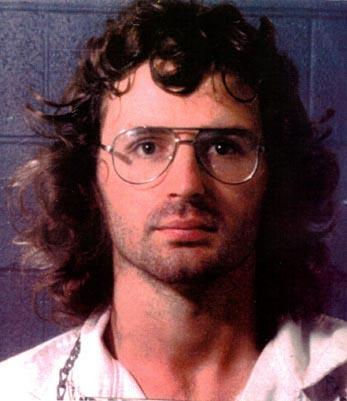
David Koresh
Introduction
About
BIOGRAPHY OF DAVID KORESH
Born as Vernon Wayne Howell
Prophet, Religious Leader and the Tragedy of Waco
David Koresh, born Vernon Wayne Howell on August 17, 1959, in Houston, Texas, became one of the most controversial religious figures in modern American history. As leader of the Branch Davidians, a small apocalyptic religious movement based at the Mount Carmel Center near Waco, Texas, he developed a theology centered on biblical prophecy, the Book of Revelation and the Seven Seals. His leadership ultimately culminated in the catastrophic 51-day Waco siege of 1993, during which dozens of Branch Davidians, including children, died. Koresh's life presents a complicated story involving childhood instability, religious searching, claims of divine revelation, struggles for leadership, sexual and marital controversies, and an increasingly intense apocalyptic worldview. His story cannot be understood simply as that of a religious preacher. It was also the story of a man whose personal experiences, ambitions and interpretation of Scripture became increasingly intertwined with the destiny of the community he controlled.
A Troubled Childhood
Koresh's early life was marked by instability. He was born to Bobby Wayne Howell and Bonnie Sue Clark, who were unmarried teenagers at the time of his birth. His parents separated when he was very young. His mother subsequently experienced difficulties in her personal life and, for a period, placed Vernon in the care of his grandmother and an older sister. One particularly significant event occurred when Koresh was approximately five years old. After his mother remarried and became sufficiently stable to raise him herself, he learned that the woman he had understood to be his mother had not been living with him during his early childhood. The revelation reportedly had a lasting emotional impact upon him. He also later claimed that he had been sexually abused by a male relative during childhood. His school years were difficult. He struggled academically, partly because of dyslexia and poor eyesight, and was placed in special education classes. He described himself as lonely and was bullied by other children. Around the age of twelve, however, his circumstances began to change. He became interested in sports, developed physically and gained greater confidence. Nevertheless, his formal education did not continue for long. He dropped out of Garland High School during his junior year and subsequently moved through various jobs without establishing a stable career.
Early Sexual and Religious Experiences
Koresh's adolescence and early adulthood were accompanied by increasingly complicated sexual and religious experiences. At nineteen, he entered into a sexual relationship with a sixteen-year-old girl who became pregnant. He never developed a relationship with the resulting daughter. He subsequently became intensely involved with Christianity. He described himself as a born-again Christian and became associated first with the Southern Baptist Church and later with the Seventh-day Adventist Church. His religious interests were not merely conventional. He increasingly interpreted biblical passages as personal messages directed toward himself. While involved with the Seventh-day Adventist Church, Koresh developed a relationship with Sandy Berlin, the fifteen-year-old daughter of the pastor. According to accounts in the source material, he became convinced that a passage in Isaiah represented divine confirmation that he should marry her. When he presented this interpretation to her father, the pastor rejected it and ordered him to end the relationship. Koresh refused, and his conduct eventually resulted in his expulsion from the church. This episode is important because it illustrates an emerging characteristic of Koresh's religious thinking: his tendency to interpret biblical passages as direct divine instructions concerning his own life.
Joining the Branch Davidians
In 1981, Koresh moved to Waco, Texas, and joined the Branch Davidians, a religious movement descended from the Davidian tradition. The group was based at the Mount Carmel Center and had developed teachings concerning biblical prophecy and the establishment of a Davidic kingdom. Koresh gradually became increasingly influential within the movement. In 1983, he began claiming that he possessed the gift of prophecy. He taught his own interpretation of Scripture, including an idea he called "The Serpent's Root." His teachings created tension within the community, particularly with George Roden, son of former Branch Davidian leader Benjamin Roden. Koresh's ambitions extended beyond simply becoming a preacher. He came to see himself as a person specially chosen by God to fulfil biblical prophecy. He eventually adopted the name David Koresh, a name with deliberate biblical and prophetic symbolism. "David" evoked the biblical King David, while "Koresh" is the biblical name associated with Cyrus the Great, the Persian ruler who is described in the Hebrew Bible as an instrument of God.
Conflict and the Struggle for Mount Carmel
The competition between Koresh and George Roden became increasingly intense. At one point, Koresh and his followers were forced away from the Mount Carmel property and established a primitive camp near Palestine, Texas. Despite their difficult circumstances, Koresh used the period to recruit followers from different parts of the world, including the United States, Britain, Israel and Australia. Koresh also traveled to Israel and claimed to have experienced a vision identifying him with the biblical Cyrus. He increasingly believed that his mission was connected to the establishment of God's kingdom. Initially, he considered Israel a possible location for his prophetic destiny, but by the early 1990s he had come to believe that his final confrontation would occur in Waco and that Mount Carmel itself represented the prophetic Davidic kingdom. In 1987, a confrontation over an allegedly disturbed corpse at the Mount Carmel cemetery gave Koresh an opportunity to challenge Roden. Koresh returned to the property with armed followers, resulting in a gunfight. He and his followers were subsequently prosecuted, although they were acquitted or otherwise avoided conviction in the proceedings. Roden later became involved in another violent incident and was eventually confined to a psychiatric hospital after being judged insane. His financial problems enabled Koresh and his followers to reclaim Mount Carmel. By this point, Koresh had emerged as the dominant leader of the Branch Davidians.
Marriage, Sexual Doctrine and Allegations of Abuse
Koresh's authority became closely connected with his religious teachings concerning marriage and sexuality. He developed what was described as the doctrine of the "House of David," through which he claimed religious justification for relationships with multiple women. These practices later became central to allegations concerning child sexual abuse and statutory rape. Former members alleged that Koresh had fathered children with multiple women and girls and that he exercised exclusive sexual authority over women within the community. The evidence surrounding some individual allegations has remained contested. Investigations did not establish every allegation, and some reports were contradictory. Nevertheless, accounts concerning young girls being regarded as Koresh's wives and the psychological environment experienced by children remain significant aspects of the historical record. Psychiatrist Bruce Perry, who studied children who survived the siege, described an environment involving fear, intimidation, coercion, shame, guilt and other destructive emotional techniques. Thus, even where particular allegations remained disputed, Koresh's religious authority created a highly unequal power structure in which his interpretation of divine revelation could influence intimate and family relationships.
The Waco Siege
By the early 1990s, federal authorities had become concerned about the Branch Davidians, including allegations involving weapons. On February 28, 1993, agents of the Bureau of Alcohol, Tobacco and Firearms attempted to raid the Mount Carmel compound. The operation immediately became violent. Four ATF agents and six Branch Davidians died in the initial confrontation. The FBI subsequently assumed responsibility for the standoff. Koresh had been wounded during the confrontation, but he remained inside the compound with his followers. Over the next fifty-one days, FBI negotiators maintained communication with him. Koresh used these conversations to discuss biblical prophecy and continued working on religious writings that he claimed needed to be completed before he would surrender. The situation gradually became a confrontation between federal authority and a religious community convinced that its leader possessed a divine mission.
The Final Fire
On April 19, 1993, Attorney General Janet Reno approved the FBI's final operation to force the Branch Davidians from the compound. CS gas was introduced into Mount Carmel, with armored vehicles being used in the operation. The compound subsequently caught fire. Seventy-nine Branch Davidians died, including twenty-one children under sixteen. Koresh, then thirty-three years old, was also killed. His exact manner of death remains uncertain. Coroner reports indicated that he died from a gunshot wound to the head, but the available evidence could not definitively establish whether he killed himself or was killed by another Branch Davidian.
Legacy
David Koresh's legacy remains inseparable from the tragedy at Waco. His life illustrates how personal history, religious conviction, charismatic authority and apocalyptic interpretation can become intertwined within an isolated community. He presented himself as a divinely appointed interpreter of biblical prophecy and increasingly identified his own destiny with the fulfilment of Scripture. His followers accepted his authority to varying degrees, while outsiders increasingly regarded the community as dangerous and unstable. The Waco tragedy also had consequences far beyond the Branch Davidians. The siege became a powerful symbol within parts of the American anti-government movement. Timothy McVeigh and Terry Nichols later cited the Waco siege as a motivation for the 1995 Oklahoma City bombing, which occurred exactly two years after the end of the Waco confrontation. Ultimately, the story of David Koresh is not merely the biography of a preacher who became a cult leader. It is the story of a troubled individual who developed an extraordinary conviction about his religious identity, gathered followers around his interpretation of Scripture, and eventually became the central figure in one of the most devastating religious-government confrontations in modern American history.