Robert Nesta Marley
Introduction
About
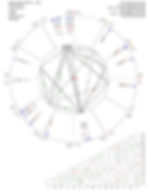
DATE OF BIRTH: 6th February 1945
TIME OF BIRTH: 2:30 am
PLACE OF BIRTH: St Ann's Bay- Jamaica
LONG: 77 W 08
LAT: 18 N 26
TIME ZONE: GMT 5
ASCENDANT: 14 Sagittarius 45
SUN SIGN: 17 Aquarius 01
MOON SIGN: 27 Scorpio 12
ROBERT NESTA MARLEY
Life, Legacy & Why He Still Matters
Early Life and Background
Robert Nesta Marley known worldwide as Bob Marley was born on 6 February 1945 in the quiet rural village of Nine Miles, located in Saint Ann Parish, Jamaica. His early life was shaped by a unique fusion of identities, hardships, and the cultural rhythms of rural Jamaica. His mother, Cedella Malcolm, was an 18-year-old Afro-Jamaican woman. His father, Norval Sinclair Marley, was a white Jamaican of English descent from Crowborough, East Sussex. Norval, working as a plantation overseer, claimed he had previously served as a captain in the British Royal Marines. Their marriage faced resistance due to race and class differences. Norval was in his 60s when Bob was born, and though he provided financial assistance, he was largely absent from family life. A lingering question surrounds Marley’s birth name: some sources claim he was first registered as Nesta Robert Marleyuntil a passport clerk reversed his first and middle names because “Nesta” sounded too feminine. Whatever the truth, Robert Nesta Marley became the name that echoed across continents. When Marley was 10 years old, tragedy struck. Norval died of a heart attack around 1955 at about age 70. This loss left Cedella alone to raise her son in poverty. Bob attended Stepney Primary and Junior High School, where he was quiet, observant, and musically inclined. His mixed-race heritage made him an outsider in rural Jamaica. Too light-skinned to be fully accepted by the Black community, yet not wealthy or privileged enough to belong to white society, Marley experienced isolation that later inspired his quest for unity, love, and liberation. Cedella later married Edward Booker, a U.S. civil servant. This union produced two of Bob’s half-brothers, Richard and Anthony Booker. The family eventually relocated to Trench Town in Kingston, a crowded, impoverished area infamous for violence but rich in creative energy. It was here that Bob Marley’s destiny began to take shape.
Musical Beginnings
Life in Trench Town introduced Marley to a harsh but deeply inspiring environment one defined by street struggles, Rastafari spirituality, and burgeoning musical innovation. Bob found solace and community among fellow musicians, including Neville “Bunny” Livingston (later Bunny Wailer) and Peter Tosh. Influenced by American rhythm and blues, soul artists like Ray Charles and Sam Cooke, and Jamaican ska and rocksteady sounds, the trio formed The Wailers in 1963—originally called The Wailing Wailers. Their name reflected their truth: they were young men crying out against poverty, oppression, and injustice. Their first single, “Simmer Down”, became a local hit. Over the next decade, The Wailers transitioned musically from ska to rocksteady, and finally to reggae, a genre rooted in African rhythms, resistance, and spirituality. Marley’s song-writing stood out for its poetic fusion of biblical themes, street wisdom, and political protest. By the early 1970s, he had become the group’s primary voice and creative visionary.
Rise to International Fame
Bob Marley’s global ascent began when The Wailers signed with Island Records in 1972 under producer Chris Blackwell. Their album “Catch a Fire” was revolutionary—it introduced reggae to international rock audiences. Follow-up albums like “Burnin’” (1973) - featuring classics like “Get Up, Stand Up” and “I Shot the Sheriff” - cemented Marley as a rising icon. Eric Clapton’s cover of “I Shot the Sheriff” in 1974 became a global hit, bringing Marley’s music to millions who had never heard of reggae or Rastafarianism. Around this time, internal friction led Peter Tosh and Bunny Wailer to leave the group. Bob continued under the name Bob Marley & The Wailers, alongside the vocal trio The I-Threes, which included his wife, Rita Marley, as well as Marcia Griffiths and Judy Mowatt. Marley was not merely a musician—he became a cultural ambassador for Rastafarianism, a spiritual movement celebrating African identity, social justice, and the teachings of figures like Marcus Garvey and Emperor Haile Selassie I of Ethiopia. His music became a spiritual and political force. In December 1976, just days before his free “Smile Jamaica” peace concert, gunmen stormed Marley’s home and shot him, his wife Rita, and his manager. Miraculously, all survived. Despite his injuries, Bob performed at the concert, declaring, “The people who are trying to make this world worse aren’t taking a day off—how can I?” In 1978, during the “One Love Peace Concert,” Marley summoned Jamaica’s political enemies Prime Minister Michael Manley and opposition leader Edward Seaga—to join hands on stage. This iconic gesture symbolized his unwavering commitment to peace and unity.
Later Years and Death
In 1977, Marley injured his toe while playing football. What seemed minor was diagnosed as acral lentiginous melanoma, a rare and aggressive form of skin cancer. Marley rejected amputation due to religious beliefs and continued to tour the world throughout his illness. His final concert took place in Pittsburgh, USA, on 23 September 1980. By then, cancer had spread to his lungs, liver, and brain. On 11 May 1981, Bob Marley died in Miami, Florida, at the age of 36. His final words to his son Ziggy were: “Money can’t buy life.” He was given a state funeral in Jamaica and buried in his birthplace, Nine Miles, with his guitar, a Bible, and a branch of ganja.
Legacy
Bob Marley is more than a musician, he is a symbol of resistance, hope, and spiritual awakening. His album "Legend" (released posthumously in 1984) is the best-selling reggae album of all time. Songs like “Redemption Song,” “No Woman, No Cry,” “One Love,” “Buffalo Soldier,” and “Three Little Birds” remain anthems of comfort and courage. Bob Marley’s songs work on many levels: they’re musically memorable, but also rich with social, spiritual and personal meaning. He combined his Jamaican roots, Rastafari faith, Pan-African vision and universal humanism in his songwriting. When you listen, it helps to think: is he singing about love? About fear? About oppression? About uplift? Often he’s doing all of those at once. The Bob Marley Museum at 56 Hope Road, Kingston, once his home, preserves his legacy. His children Ziggy, Damian “Jr. Gong,” Stephen, and others carry on his musical and humanitarian work.
His influence extends far beyond music:
· He globalized reggaeand Rastafari culture
· Championed Pan-Africanismand spiritual consciousness
· Became a voice for the poor, the oppressed, and the colonized
· Inspired generations of artists, activists, and revolutionaries
Why Bob Marley Still Matters
Bob Marley remains profoundly relevant because:
· His music heals. It blends rhythm, faith, protest, and poetry.
· His message speaks to today’s world—inequality, racism, war, and the search for unity.
· He proved that art can drive social change.
· His life story from rural hardship to world icon embodies resilience.
“Emancipate yourselves from mental slavery,” he sang. These words still awaken hearts across continents.