
John Agyekum Kuffuor
Introduction
About
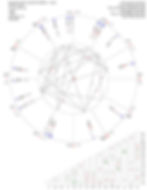
Date of Birth: 8th December 1938
Time of Birth: 11 : 42 am
Place of Birth: Kumasi- Ghana
Long: 2 W 0
Lat: 7 N 0
Time Zone: GMT 0
Ascendant: 7 Pisces 16
Sun Sign: 15 Sagittarius 44
Moon Sign: 0 Cancer 21
PRESIDENT JOHN AGYEKUM KUFUOR
A Statesman of Democracy and Development
THE GENTLE GIANT
John Agyekum Kufuor, born on December 8, 1938, in Kumasi, Gold Coast (now Ghana), stands as one of Africa’s most respected democratic leaders. As the second president of Ghana’s Fourth Republic, he guided the nation through a transformative period from 2001 to 2009, championing economic reforms, democratic governance, and social development. His presidency is widely regarded as a turning point in Ghana’s democratic consolidation and economic resurgence. Kufuor’s story is not only one of political achievement but also of a lifelong dedication to public service, grounded in education, legal training, and a vision of good governance.
Early Life and Education
Born into a prominent Ashanti family in Kumasi, John Agyekum Kufuor grew up in an environment that valued tradition, leadership, and service. His family’s background provided him with early exposure to leadership roles, while his education nurtured his intellectual and moral foundation. He attended Prempeh College, one of Ghana’s elite secondary schools, where he excelled academically and developed a deep interest in leadership and public affairs. Recognizing his potential, he pursued higher education abroad. In the United Kingdom, Kufuor studied law at Lincoln’s Inn, London, and later at Exeter College, Oxford University, where he specialized in politics, philosophy, and economics. His years in Britain shaped his worldview, introducing him to democratic principles, governance models, and the importance of the rule of law values that would later define his presidency. Upon completing his education, Kufuor was called to the Bar and practiced law. His professional background as a lawyer provided him with a disciplined approach to problem-solving and a keen awareness of the relationship between law, justice, and governance.
Entry into Politics
Kufuor’s political journey began in the 1960s, a turbulent period in Ghana’s post-independence history. In 1969, he was elected as a Member of Parliament under the banner of the Progress Party, led by Dr. Kofi Abrefa Busia. He quickly distinguished himself as a promising young politician, serving as Deputy Minister of Foreign Affairs in Busia’s government. His time in this role gave him international exposure, including representing Ghana at the United Nations and the Organisation of African Unity (OAU). However, Ghana’s fragile democracy was once again interrupted when the Busia government was overthrown in a military coup in 1972. Kufuor, like many politicians of his era, found his career disrupted. Yet these challenges did not deter him. Over the next two decades, he remained engaged in politics, aligning himself with the Danquah-Busia-Dombo political tradition, which emphasized liberal democracy, human rights, and economic freedom. When Ghana transitioned to constitutional rule in 1992, Kufuor became a founding member of the New Patriotic Party (NPP). He rose through the ranks of the party, serving as General Secretary and Member of Parliament, before positioning himself as its presidential candidate.
The Road to the Presidency
Kufuor contested the 1996 presidential elections but was defeated by incumbent President Jerry John Rawlings. This defeat, however, strengthened his resolve and enhanced his national profile. By 2000, Ghana stood at a crossroads: Rawlings had completed his constitutionally mandated two terms, and the electorate yearned for change. Kufuor’s message of “Positive Change” resonated with the public, offering hope for stability, economic growth, and democratic governance. In December 2000, Kufuor won the presidential election after a runoff, defeating the NDC candidate John Evans Atta Mills. His victory marked Ghana’s first peaceful democratic transfer of power from one political party to another a milestone that enhanced Ghana’s reputation as a model of democracy in Africa. On January 7, 2001, John Agyekum Kufuor was sworn in as the President of Ghana. His inauguration symbolized not only his personal triumph but also the maturity of Ghana’s democracy.
Presidential Achievements- Economic Growth and Stability
Kufuor’s presidency (2001–2009) was characterized by economic reforms, democratic consolidation, and social development. His policies reflected his belief in the power of good governance to transform societies. Kufuor inherited an economy burdened by debt and structural challenges. His administration introduced policies aimed at liberalizing the economy, attracting foreign investment, and encouraging private sector growth. With support from international partners, Ghana qualified for debt relief under the Heavily Indebted Poor Countries (HIPC) Initiative, which reduced the country’s external debt burden and freed resources for development projects. Under his leadership, Ghana recorded impressive growth rates, averaging around 5–6% annually. His government emphasized macroeconomic stability, improved fiscal management, and greater transparency. These measures restored investor confidence and positioned Ghana as one of Africa’s fastest-growing economies.
Social Programs Infrastructure and Agriculture
Kufuor also prioritized social welfare. In 2003, his administration introduced the National Health Insurance Scheme (NHIS), a landmark initiative designed to make healthcare accessible and affordable for all Ghanaians. This replaced the unpopular “cash-and-carry” system, which had excluded many poor citizens from accessing healthcare. In education, he launched the Capitation Grant Scheme, which eliminated school fees for basic education, thereby increasing school enrollment nationwide. He also introduced the School Feeding Programme, providing free meals to children in public schools and improving both nutrition and attendance. Kufuor invested heavily in infrastructure development, including road construction, energy expansion, and water supply projects. In agriculture, he promoted modernization and food security, supporting farmers with improved inputs and market access.
Democracy and Governance
Kufuor’s leadership reinforced Ghana’s democratic institutions. He upheld the independence of the judiciary, respected the constitution, and promoted press freedom. His government tolerated criticism, allowing civil society and the media to flourish. Internationally, he played a crucial role in regional diplomacy, mediating conflicts in countries such as Liberia and Côte d’Ivoire.
International Recognition and Post-Presidency Contributions
Kufuor’s presidency elevated Ghana’s standing on the world stage. He served as Chairman of the African Union (AU) from 2007 to 2008, during which he advocated for continental integration, peace, and stability. He also maintained strong ties with international partners, attracting development aid and investment. His leadership earned him numerous awards and honors, including the World Food Prize (2011) for his efforts in improving food security in Ghana and Africa. After completing his two constitutionally mandated terms in 2009, Kufuor remained active in public life. He established the
John A. Kufuor Foundation,
focusing on leadership, governance, and sustainable development in Africa. The foundation trains young leaders, promotes democratic governance, and supports initiatives in agriculture, health, and education. Kufuor has also continued to engage in international diplomacy, serving as an observer in elections, a mediator in conflicts, and a global advocate for good governance. His wisdom and experience have made him a respected elder statesman, consulted on matters of democracy and development worldwide.
Legacy and Impact
John Agyekum Kufuor’s legacy is multifaceted. Domestically, he is remembered as the leader who consolidated Ghana’s democracy and laid the foundation for sustained economic growth. His social programs, particularly the NHIS and educational initiatives, have had lasting impacts on the lives of ordinary Ghanaians. Internationally, he is celebrated as a voice of moderation, diplomacy, and democratic values in Africa. His presidency demonstrated that African leaders could govern responsibly, respect term limits, and leave office peacefully. This example has inspired future leaders and strengthened Ghana’s reputation as a beacon of democracy on the continent.
Conclusion
From his early years in Kumasi to his rise as a global statesman, John Agyekum Kufuor’s life has been defined by service, vision, and integrity. As Ghana’s president, he combined economic pragmatism with social responsibility, creating policies that improved lives while strengthening institutions. His leadership style calm, thoughtful, and inclusive earned him admiration at home and abroad. Today, Kufuor’s story serves as a reminder that effective governance rooted in democratic principles can transform nations. His legacy endures not only in Ghana’s progress but also in the aspirations of young Africans who see in him a model of statesmanship. John Agyekum Kufuor remains, in every sense, a leader of consequence an architect of modern Ghana and a custodian of democratic values.
Pisces Rising and the “Gentle Giant” Archetype
The Ascendant, or rising sign, reveals how others perceive an individual and how one navigates life’s immediate circumstances. Pisces rising gave Kufuor a gentle aura, marked by calmness, adaptability, and a sense of compassion. This rising sign explains why, despite his towering physical presence, he was widely called the “Gentle Giant.” Pisces rising individuals are often dreamers, visionaries, and healers, concerned not only with personal ambition but with the welfare of others. In Kufuor’s case, this quality translated into a leadership style oriented toward consensus, reconciliation, and long-term welfare policies, especially in healthcare and education.
The ruler of Pisces, Neptune, occupies the 7th house of partnerships, diplomacy, and public image. This made Kufuor dependent on alliances and cooperation for success. Neptune here symbolizes his role as a negotiator both domestically and internationally. It also indicates the projection of ideals onto him by the public, which sometimes led to misunderstandings or criticism when reality fell short of expectations.